Join newsletter:


AddThis Social Bookmark Button

Dancing Through Life: Getting Tubed in Big Sur June 27, 2009

Filed under: marc's writing, my work — Marc @ 9:33 pm

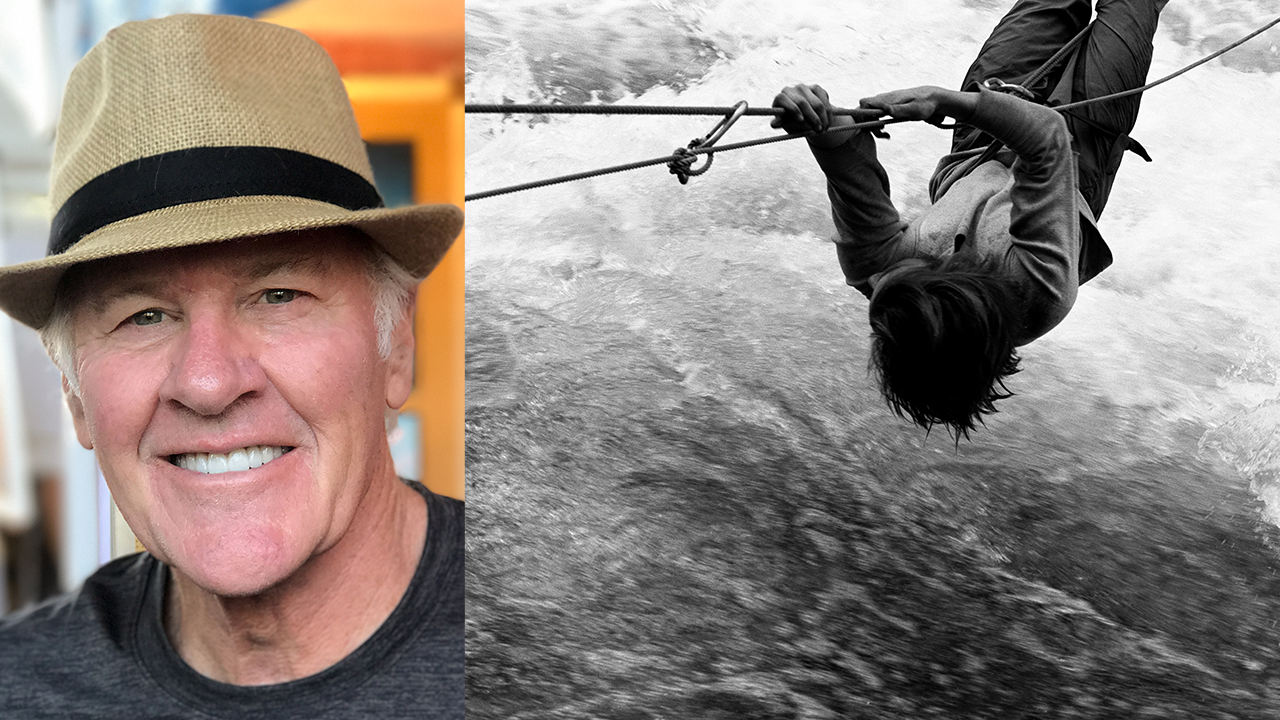
surfer-looking-out.jpg

Late in the summer of 1995 my wife and children and I decided to go camping in Big Sur.  We loaded up with all of the camping paraphernalia, bikes on top and of course my surfboard and wetsuit. We stayed at Pfeiffer campground out in a sunny open spot with millions of trees all around. Fall was just touching the air and it was beautiful.

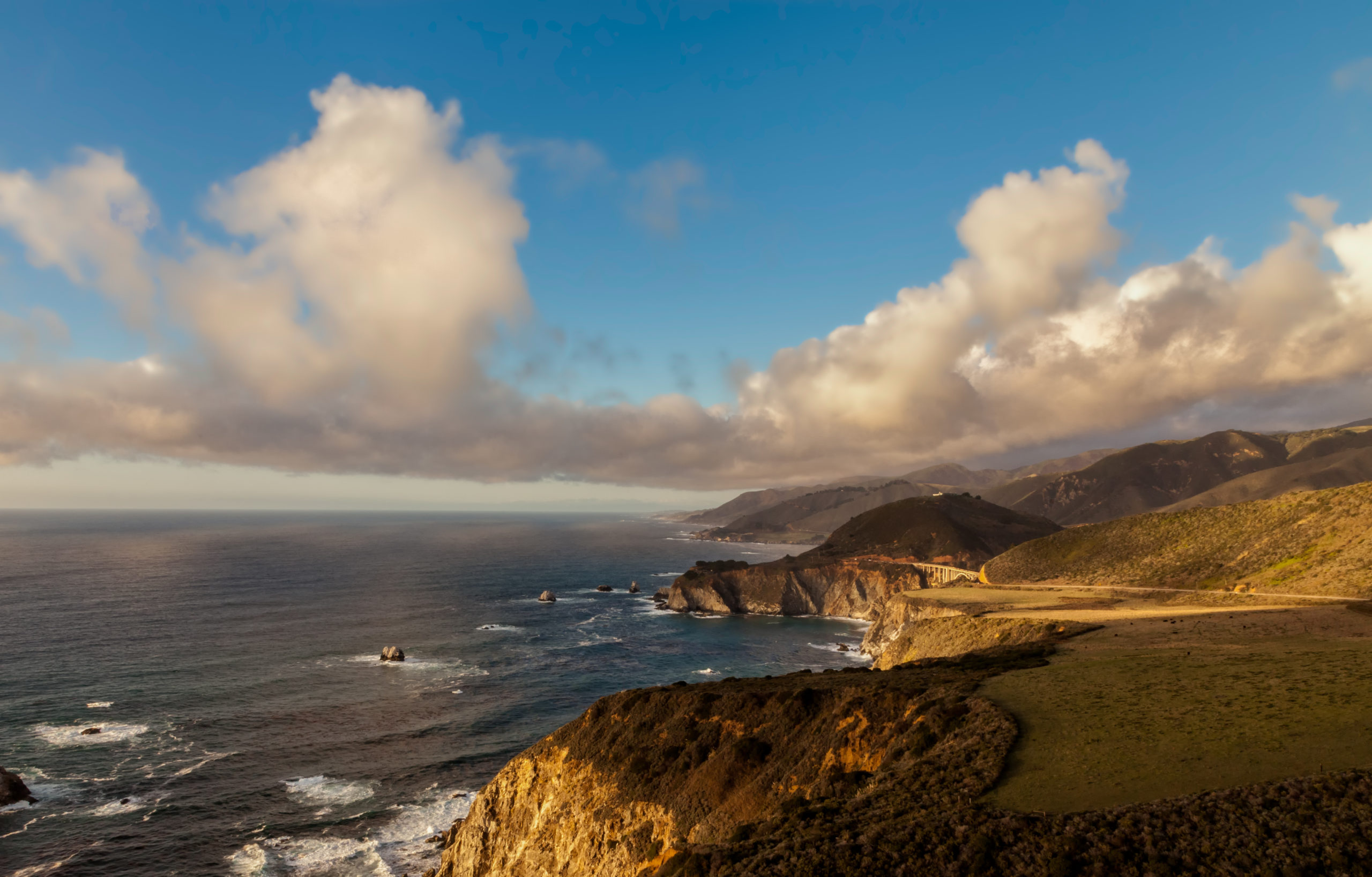
sur-north1.jpg

One afternoon, we made our way to Andrew Molera, a park at the beginning of Big Sur, only about three miles from the point that is the northernmost boundary of the Sur. It lies at the foot of the Santa Lucia range, where the mountains flow down into a meadow and then jut out into the sea.

To get to the beach you have to hike about a mile through a winding path that takes you past flowing eucalyptus trees, then across a flat open meadow that has become a campground, finally past some willows, and then suddenly you are there at the beach. All this sounds fun and wonderful, except when you are carrying assorted items, pushing a bike and keeping small children encouraged that the beach is “just around the next corner.” Naturally it was a relief to get to the spot.

We deposited all of our stuff, and of course I had a look at the waves. I had been to this point a few weeks earlier and had looked at this perfect wave as it peeled off the reef and rolled into shore. I marveled at its perfection, though the wave was perhaps only a foot high. I knew that on the right day, with the right swell, it would set up here and give an awesome ride.

I looked outside and saw what appeared to be small surf breaking off the rocks that hung right at the corner of the point. It didn’t seem to be much, but a guy and a girl were there getting their wet suits on, preparing to go out. I asked them about the waves and they said that it was big enough to surf; this instantly peaked my interest, so I high-tailed it back to the van on my bike to retrieve my board and wet suit.

I got my stuff and headed back to the beach, carrying my board awkwardly in one arm while trying to hold on and peddle through the sand and dirt. This proved to be quite a challenge. My determinism won out and I was quickly back at the beach in spite of the tiring and awkward transport problem.

I got my wetsuit on, grabbed my board and paddled out next to the two that I had spoken with on the beach. The girl was a “sponger,” that is she was on a boogie board. The guy was riding a short board. He was getting right in close to the rocks and catching 3-5 foot waves, getting short but fun rides.

From my perspective, out in the waves, I had quite a view: Above me were the mountains sharply jutting up to the sky like a steep staircase going from this sparkling sea to some other hidden preserve. 180 degrees the other direction, there was a rock jutting out of the sea about 100 feet high and 300 feet around. The waves came around the rock and were then propelled towards shore, but really only broke right next to the small rock next to the point.  It was quite exhilarating out there with the waves crashing, spraying mist up which was caught in the sunlight. It sparkled and flashed as it drifted back to the sea.

Getting right up next to the rock was intimidating. The ocean is unpredictable, and in its fickleness I didn’t want to end up like a toothpick pummeled against the rocks.  So in my caution I tried catching waves in a few spots away from the rock, but had no success. The waves would come in, I would paddle like mad but they teased me and would not set up, they rolled by and laughed at me, this fool out in the water.

The sponger girl told me that the only place to catch them was right up next to the rocks. “You have to get right in there.”  I wasn’t happy to hear this and continued to try to beat the ocean at its own game, but I was like a tennis player being served aces by a pro. By now the sea had racked up an impressive 10 serves to my zero waves caught.  Sitting on my board I looked back to shore. A group had come in on horseback and were moving along the beach, looking out at us in the water. My family was back there playing on the sand, my wife reading, wondering if dad was going to catch anything.

The girl and guy paddled in, so now I had no excuse not to get in the right spot. I paddled right over next to where it was breaking up against the rocks. The force of the waves was awesome— whoosh—this huge force would come in and smash against the rocks. I got as close as I dared, which was very close to the smash-point.

Then it happened. A good-sized wave moved in toward me. This is the moment of truth when a wave walls up outside and begins to roll in, picking up in height. This is the ocean rolling its ball to the pins, only I’m the pins, and it’s my desire to get a strike. The wave rolled in, I in turn did my part of the dance, turning to meet it and then paddled. This is the real moment of truth, if all of my efforts match the energy flow of the sea, and if I have chosen the right spot to grab my partner, then we will dance.

surfer-small.jpgThe wave moved in towards me, the toothpick next to the rocks. I paddled, looking over my left shoulder. “Will it pick me up, will it?” Faster, faster, turn a bit, “yes, I’ve got it!” This is a connection straight to the multi-thousand horsepower engine of a wave. By comparison, man-made engines are toys. Now I was at the start of this power curl that picked me up, hoping to smash me against the rocks so it could score its final victory. But I outsmarted it by being in the right spot, paddling fast enough and at the right angle to catch this wild beast. I popped up and turned to angle on the wave. The wave picked me up fully and now I was Tarzan riding on the back of this wild tiger. I stood up and knew that I had it, knowing I was riding the beast that would sooner thrash me and teach me a lesson about who was boss.

Now I was king and in control. “Wave time” changes, now the seconds that go by are in a different time zone. By my watch only a few seconds had ticked by since I started this dance, but each second was in its own unit, shining and twisting, stretching like salt water taffy at the boardwalk. The seconds stretched, the wave picked up bigger and then it transformed: It became a rocket, a jet engine. It started to fold over me and began to roar and blast out spray. The beast had gone from just a tiger loping along, to one in a full-death-sprint after its prey. I knew something was happening, but being in the experience instead of looking at it, I didn’t really know what it was.  I could feel my wave transforming and the ride changing, the sound, the raw energy getting closer to me.

I heard something else. From the shore I heard cheering, could that be?  I shot a quick glance to my left and saw people lined up on the beach waving and cheering in my direction. They had noticed this magic that I was riding too. Now I knew something was happening.

The wave was over my shoulder trying to catch me and win, trying to swat me off, like a wild bronco with a rider strapped to its back. But this was the magic: It couldn’t get me. I was defying its intentions and defying gravity too. I was tricking time in the bargain turning its ever-clicking wheels into a twisted stretched out moment. I, not the sea, not gravity, and not time owned this moment. It was like the force and power of the whole universe had a door on it that can be opened at the right moment and you can step through. I had done this and I was on the other side of this force.

I thought this was the longest ride I had ever been on and saw that the wave was just going right down the line towards the beach to the south. For a moment I thought of exiting, but then why? Ride this beast all the way in, stay with this magical moment. The force was diminishing, but the effect on me was not: I was out of my head. This was amazing, something had happened that I didn’t know if I could ever describe to another.

I finished the wave off, turned and quickly paddled back out. I was stoked beyond belief. My body was vibrating with exhilaration. The grin on my face was bigger than the board. The crowd was still cheering for me. All I could think was that I wanted more. I didn’t want the taffy to snap back, the force to die away and the ride to be over. I wanted this feeling to go on forever, to stay on the other side of the door forever.

I paddled back to the spot, this time happy to be right next to the rocks, cocky that the waves couldn’t get me. I had been knighted by the sea, I had the magical ride.

I danced around with some other waves, but nothing even approaching my magic wave came by and I decided to take my act to the shore and have my victory with the sea, bronzed forever in my memory.

I paddled in as far as I could, found the bottom, and got off and walked in with the board under my arm. I got to shore and undid my leash, winding the cord around my board.

My kids found me and screamed, “Dad you should have seen the wave you were on, you got tubed!” When I heard this I was in disbelief. I had a great ride but tubed? Nah. Just a great ride.

I walked up the beach and saw the sponger girl and the guy, who said, “Man you were in the barrel!” Then I really was tubed, I really had made it.

My wife told me the back-half of my board was covered by the wave, only the front poking out.  My family was thrilled to see dad get the ultimate ride and come back smiling. We had all shared this dance that would live on forever as the moment I stepped through the door in Big Sur.

sur-fence.jpg

An Inside Look at Ansel Adams’ Home and Darkroom June 24, 2009

Filed under: Marc's Photo Show, masters — Marc @ 10:14 pm

aa-hernandez.jpg

 Click to See Video

Ansel Adams was an ultimate icon of photography for me growing up. I read The Eloquent Light, his biography by Nancy Newhall when I was about 12 and was totally caught up by his ability to capture images in nature coupled with his deep commitment to the environment—myself being both a photographer and a budding outdoorsman.

Shortly after that Ansel came to my school—the Peninsula School, and had a exhibition in our gallery upstairs. I well recall my mom talking him about his shots of Manzanar where she had met him during “the war”—being introduced to him by her is an indelible image in my mind, but I regret there was no actual photo of that moment.

I went on to read all of his books on photography, which I highly recommend for basics of photography nowhere else covered.

Many years went by and I had the opportunity to interview Michael Adams in Yosemite, in fact at Glacier Point, before the park service opened the road for the season, so we literally had the place to ourselves. Michael then invited us to come to Ansel’s (now his) home on the Monterey peninsula. You can imagine the experience of walking in and taking in his home!

We shot a segment in his gallery where Michael told me stories behind many of Ansel’s classic work, including Moonrise, Hernandez, one of his most haunting images, from Michael’s perspective as a 7 year old.

aa-darkroom.jpg

We then went through his darkroom, the darkroom—fully custom made by Ansel, like none I have ever seen. You’ll see images of Ansel actually at work in it, printing his images. (Thank you to his family for loaning us this unreleased footage.) You’ll get an idea of how he was able to interpret his images as he had visualized them at the time of shooting. Whether you are purely a digital photographer or not, drink this in as the basis for our modern photography, for example you’ll see tools in use that live on in photo-software today.

I feel indeed fortunate to have had this experience and to see the surrounds that Ansel saw on the coastline every day. I’m really happy to share this rare glimpse into the world of a true master.

Five Tips From Marc’s Photo Show Guests June 16, 2009

Filed under: Marc's Photo Show, learning photography — Marc @ 10:05 pm

My concept when I began MSPS (Marc Silber’s Photo Show) was to find accomplished photographers who were also generous enough to share their know-how, and connect them with you the viewers as directly as possible. It actually began when I was delivering my workshops and I had the thought “wouldn’t it be amazing to hear directly from Ansel Adams himself?” But at that time I couldn’t find footage of him that covered his key points on photography.  But then the show began and I did my interview with Michael Adams who offered to loan us unreleased footage of Ansel—what gems!

From there the show’s idea grew to talking with various photographers who would show you and talk about their skills.  In addition, I started doing short video tips covering key points from these photographers or inside stories about their work.

So I thought it would be a good idea to summarize some of the point I’ve covered so far, but this is just one of those sample ice cream spoons, go to the video to get the whole bite!

1.   Ansel Adams:  What it means to visualize the shot. He quotes from Alfred Stieglitz, that the photograph should express what you saw and felt. The whole key lies in the process of visualization.

2.  Chase Jarvis:  Get out and get your shots: Look over the scene without using your camera to get the feel of it. Look at how you can “turn the shot on its head.”  Don’t be afraid to blow it, just “bang the streets, bang the shutter.”

3. Thomas Hawk: He carries his camera & backpack with him everywhere—he  shoots daily, “stealing moments” here and there. He looks for images of all types and is willing to do what it takes to get them—like wading into the cold Pacific in December to get the shot of the Golden Gate Bridge, near dark (I was there with him.)

4. Jeff Flindt: He travels the world getting shots of the best surfers on the planet. He can’t afford to miss a shot. He “babies” his equipment, doesn’t let sand and stuff get into his CF cards for example. He shoots early morning to get that great light. He  does his cropping in the camera and processes quickly.

5.    And my final point: I’ve heard this from so many photographers: Don’t get hung up in your equipment, get your shots.  It’s not about the machine, it’s about learning to see your shots, and having the passion to go out and find them. Look at other’s work to see what they saw and why you like the shot and go out and get your own images.

What sticks in your mind from MSPS so far?

Robert Scoble’s 5 Tips for Leveraging Social Media June 6, 2009

Filed under: Marc's Photo Show — Marc @ 5:37 pm


scoble.jpg

 Click to watch

Join me as I talk with Robert Scoble about social media tips for photographers. Scoble literally wrote the book on blogging—”Naked Conversations”, and continues to be a vanguard in the use of new media such as twitter, FriendFeed, Flickr, etc. Take note of his tips to get your photographs seen and be part of the “conversation.” He and Thomas Hawk really popularized the idea of “Photo Walk”, which is how Robert and I met, he asked me to join him on one.

I thought it would be interesting to get his take on how how photographers can make use of social media, some of the points he mentioned were:

1.   How to get attention for your photos and a following.

2.  Create an on-going relationship with other photographers: Reciprocity, For example commenting on their photos and blogs.

3. Build your brand around a certian style of photography and join that community: groups, blogs, etc, will bring you more and more visitors.

4. Keep up the conversion in places like FriendFeed  so others can see what you care about too.

5. With Twitter and Friend feed you can get very rapid feedback. You can “tease” the photos you’ll be putting up after you process them, even put up shots form your iPhone to FaceBook, Twitter, etc, to let people see what you’ll be putting up.

Click here to see some of my shots that day

Whispering Secrets I Know I’m Not Supposed to Hear May 27, 2009

Filed under: Marc's Photo Show, learning photography — Marc @ 9:30 am

Whispering Secrets I Know I’m Not Supposed to Hear, originally uploaded by Thomas Hawk.

Thomas Hawk posted this amazing photo taken at the end of our very cold shoot! He was out in the water with a long exposure, as you can see from my iPhone shot: .ms-th-in-water-3.jpg

Here’s what he said:

I had a lot of fun a few weeks back out at the Golden Gate Bridge doing a video interview about my photography with Marc Silber for his new photography series Marc Silber’s Photo Show. We talk about my style, my equipment and what personally motivates me in photography. Thanks to Marc Silber for having me on his show and to Rocky Barbanica for doing a great job as usually filming and editing while out at Baker Beach at the Golden Gate Bridge. If you want to watch the video you can watch it here.

Sandisk is sponsoring Marc’s new show and I think it’s really great that they are willing to invest in social media this way. I’ve personally used Sandisk cards for many years and think they’re great! You can follow Marc’s blog here and his great new video series here.

The shot below is one of the shots I got of the Golden Gate Bridge while out shooting with Marc.

Tips From Thomas Hawk–How He Gets His Shots May 26, 2009

Filed under: Marc's Photo Show, learning photography — Marc @ 8:47 pm

a-little-bit-of-you.jpg

Tune in to to Thomas Hawk on Marc’s Photo Show

A few weeks ago  as the sun was about to set into the Pacific, Thomas Hawk and I, along with our producer Rocky, met up at Baker Beach in San Francisco–a tremendous view of the Golden Gate Bridge. With the bridge as our backdrop, I talked to Thomas about how he got his start in photography and some of his key points that he uses every time he takes a photograph. Click to view our show.

Top of his list:  He carries a camera with him everywhere, and I mean he always has his photo-backpack with him.  You’ll see what he carries in his pack and hear him talk about his “tipping point”– when he decided on his mission to publish one million photos, I’ve posted a few of his shots here but check into his blog to see more.

Thomas has gone out and recorded our modern life, prolifically.  You know, 20 years from now–or more, we’ll look back nostalgically at his images and wonder why we had missed those shots. He’s not missing them, he’s grabbing them and chronicling life all around him, every single day.

th-bw-newspaper.jpg

th-zebra-graffiti.jpg

Another eamil from Jeff Flindt: Liz Clark in search of waves, in search of adventure, and in search of herself. May 24, 2009

Filed under: Marc's Photo Show, masters — Marc @ 10:32 am

In late January, Del Mar surfer girl Elizabeth “Lizzy” Clark set sail in her 40-foot sailboat on the adventure of a lifetime — San Diego to Baja, Baja to Mainland, Mainland to Central, Central to South American, South Pacific to New Zealand, and on and on — in search of waves, in search of adventure, and in search of herself.

Another email from Jeff Clark- dang  Jeff this is your “job”?

“Liz Clark — was hanging out on her sailboat at Teahupoo  during the Billabong contest.
I shot these portraits of her for the “Green Issue” of  Surfing Mag.
(I know, i need to change the temperature (color) of the underwater portion of the picture.)

Here’s her blog

tahiti_may_20_09-12504.jpg

tahiti_may_20_09-12501.jpgtahiti_may_20_09-12833.jpgtahiti_may_20_09-12781.jpg

More “Tubular” Shots From Jeff Flindt May 20, 2009

Filed under: Marc's Photo Show, learning photography — Marc @ 5:13 pm

Amazing to see these shots coming my way–look at these two just taken today (that means TODAY as in May 20, well, OK with the date line not exactly our today, but dang close) in Tahiti by Jeff Flindt. As an avid surfer I can’t resist these waves but, but look at how Jeff uses the light and gets right in the “tube” with the surfers. If you haven’t seen my interview with him click here  you’ll get some great tips that you can go right out and use.  One point he mentions is getting out early for the “Larry” light, which is exactly what you see in these shots–wow.

tahiti_may_20_09-12150.jpg

tahiti_may_20_09-12302.jpg

How Did Ansel Adams Get his Iconic Shot of Half Dome? May 17, 2009

Filed under: Marc's Photo Show, masters — Marc @ 1:29 pm

 moon-and-half-dome-aa.jpg

Moon & Half Dome by Ansel Adams

Ansel Adams’ Son Michael, told me the story of how his dad got his most famous shot “Moon and Half Dome” in Yosemite: He took it on his way to the grand hotel the Awahnee– just like you or I could have! Tune in here and hear the story for yourself.  What was really most remarkable about this moment was to be standing in the exact spot where Ansel took this shot, hearing the story as told by his son.

Moon and Half Dome © Ansel Adams Gallery 2009. All Rights Reserved, special thanks to them for allowing us to use this image.

Kelly Slater Photo by Jeff Flindt–Yesterday! May 14, 2009

Filed under: Marc's Photo Show, Shot of the Day, masters — Marc @ 11:16 am

tahiti_may_13_09-8395-1.jpg

Well dang– nothing like fresh work! Jeff Flindt sent me this shot of Kelly Slater yesterday, casually saying “I shot this photo this morning.”

Nice work Jeff, say hi to Kelly for us! Bet sure to catch our video here

Surfing Magazine Photographer Jeff Flindt Shoots the Curl! May 12, 2009

Filed under: Marc's Photo Show, masters — Marc @ 9:17 pm

9web.jpg As an avid surfer myself,  if was especially fun interviewing Surfing Magazine’s Senior Staff photographer, Jeff Flindt check out the video here. I love doing these interviews and learning how each photographer got started, their stories and tips. Jeff got his start working for Surfing Magazine, under the close direction of Larry “Flame” Moore who gave him no-nonsense, real world critiquing and taught him how to really use the light.

Jeff has shot some of the biggest names in surfing — guys like Kelly Slater (left), Rob Machado, Taj Borrow–and has earned their respect. This is point in common with all the greats of photography–the work really hard and they get it right.

Some of the points that Jeff talked about:

1. Get out and shoot early, get that full morning light (yep you don’t find the pros snoozing in.)

2. Get to know your equipment really well and take good care of it. He gave an example of “babying” your cards and keeping lint, sand, etc from getting in them “when you’re 1,000s of miles from a camera store you’ve got to have your equipment working.”

3. Don’t be obtrusive when taking live photos, get your shots without “barging in.” When going out in the culture try to blend in (Cartier-Bresson mastered  this.)

4.  He composes in the camera full frame, does very little post production, so when he’s done shooting he can process fast and get his shots to his editor.

5. Shoot a lot– you’ll hear this over and over. There is no substitute for production here. He works hard and it has paid off.

Check out out our video, take your shoes off and dream of being on one of his assignments!

BTW after our shoot Jeff went off to Tahiti and sent me this link showing his tough job, sigh.

Ken Rockwell’s Tips For Improving Composition May 1, 2009

Filed under: the art of photography, learning photography — Marc @ 5:17 pm

I had a very enlightening talk with Ken Rockwell this afternoon about focusing in on composition.  He said that whereas painters have rules they go by, their objective is to put elements into the painting, building on each for the overall composition; photography on the other hand is more about taking things out of the shot.  But then how do you arrive at a really powerful shot?

We got into this discussion by talking about my interview with Chase Jarvis, Ken mentioned that he had posted a reference to his iPhone shots, “he can get better shots with it than all the expensive equipment many photographers use, or get hung up on. What makes him so able to see and shoot those shots?”

We interrupt this discussion for an important message from Chase about getting iPhone shots…

We return you to our discussion…He said it would be insightful to have photographers talk about why they took the shot, how they came to compose it, what made it a strong shot. This of course brings up Edward Weston’s definition of composition as “the strongest way of seeing.” Oxford defines strong as powerfully affecting the mind, senses or emotions; intense; clear or prominent; distinctive.  I think we agree that a strong photograph has those qualities, but exactly how do you get there?

Ken went on to say that there are some rules, for example, you can have out-of-focus elements in the background and this works, but it’s confusing to the eye to have out-of-focus foreground.  Strong contrasts of light and contrasting elements work too. Edge burning of the print works.  But what about getting these points (and many more) all together in one place? He said, “There are books and resources about the technical aspects of photography and there are books showing photographers work, but no one has really put together a good resource for composition.”  This struck me as important questions to add to interviews on my Photo Show, “how do you compose your shots? Can you take us through the process step by step?”

I can hear the protests –”you’re trying to make the art of photography too clinical”– but if it has been done with painting, why not with photography?

So Ken, thank you for helping me to see how answering this question for our viewers would be an essential addition to the mission of Photo Show: Learning how to express your strongest way of seeing, week by week and shooting in between. What do think?

Thomas Hawk Shoot at Golden Gate Bridge April 29, 2009

Filed under: Marc's Photo Show, masters, learning photography — Marc @ 9:57 am

Thomas Hawk, originally uploaded by marc silber.

On the “set” of Marc Silber’s Photo Show–our next episode with Thomas Hawk giving his tips, discussing his photography, and finally shooting the Golden Gate Bridge, tune in to Marc Silber’s Photo Show

We had an amazing shoot last night with Thomas– he covered his style of photography, his tips (get out and shot tons, of course) and don’t be afraid to break the rules..stay tuned for the video soon.

Thomas was shooting in the freezing water until it was nearly dark–now there’s dedication to getting the shot, but you’ll see how it paid off. Rocky our producer was capturing every moment of it, including the sun disappearing into the Pacific in an orange ball–breathtaking.


hawk-8.jpg

hawk-16.jpg

hawk-11.jpg

iPhone Tips April 11, 2009

Filed under: my work, cameras — Marc @ 11:20 am

Yep, I’m hooked on my iPhone, love to take shots with it and love to hike with it and soften the miles with all those tunes (my wife rolled her eyes last weekend when she heard I was listening to Jimi Hendrix The Wind Cries Mary–ah well the ’60s-’70s gap!)

This is a long ways from the the serious in-the-darkroom–having shot with my Leica M2 or my medium format Rollie, never would have dreamed that there would be a time I’d get a shot with my phone  and actually like it.

There are some very good tips, which my friend Chase Jarvis published recently read and use they really help.

I think the cool part is being able to get those shots otherwise missed (I know I’ve told you to always carry a camera, but, dang there are those times..)  Here’s a few… memories captured along the way… See more on my FaceBook

iphone-151-edit.jpg

Thomas Hawk, getting his shot of the Golden Gate bridge, cold December day

iphone-223-2.jpg

Hiking above Silicon Valley

iphone-237-2.jpg

Feng Shui waiting for my Sponsor meeting

The “Key” to a Photograph from Ansel Adams–Rare, Unreleased Footage. March 20, 2009

Filed under: masters, learning photography — Marc @ 10:25 am

Ansel Adams used the term “visualization” often–but what exactly does it mean? How does it fit into your work flow as a photographer? I looked all over for a good explanation–then last year Ansel’s grandson Matthew loaned me rare unreleased footage–and there it was! Listen well to what he has to say. You’ll hear him quote another great photographer Alfred Stieglitz who you’ll want to get to know as he was one of the pioneers who opened the way for photography being accepted as a fine art, not merely a recording device.

This is a segment you’ll want to study over and over, go out and shoot and watch it again!  It is the key as he said.

Very special thank you to the Ansel Adams Gallery  for loaning this footage © 2009 Ansel Adams Illumes. All Rights Reserved.

Ansel Adams grandson shows off new digitally produced prints March 12, 2009

Filed under: masters — Marc @ 10:09 pm

Recently Robert Scoble and I paid a visit to Matthew Adams, Ansel’s grandson, at the Ansel Adams Gallery. Robert wrote:

The Ansel Adams gallery has a problem: there’s still a lot of demand for Ansel Adams photos (Steve Jobs allegedly has a bunch of originals in his house) but they can’t make any more original prints because Ansel has been dead for quite a few decades. That means his original prints are selling for tens of thousands of dollars (and in some cases even hundreds of thousands).

Which means most people won’t be able to put an Ansel Adams picture on their walls.

That’s changing because his grandson is leading an effort to digitize some of his photos and print them in an affordable format. But these are no mere cheap copies. They are virtually indistinguishable from the originals. Matthew Adams, Ansel’s grandson, says it’s hard for him to tell the difference and he’s around the originals all day long. Here I learn the process that they use to digitize the images. If you’re a photo geek you’ll appreciate this video.

Marc’s Mini Tip: Getting to Know Your Camera March 4, 2009

Filed under: learning photography, cameras — Marc @ 6:45 pm

It may not be sexy, but there is no short cut for making friends with your camera and getting to know it. Marc Silber gives you tips, with advice straight from the man himself, Ansel Adams. Improve your shots with this easy to follow advice. Tune in to SilberStudios.Tv for more tips.

F-stop beyond: Interview with Marc Silber February 27, 2009

Filed under: my work, learning photography — Marc @ 12:39 pm


fstop.jpg

Marc’s Mini Video: How To Improve Your Composition February 12, 2009

Filed under: learning photography — Marc @ 10:53 pm

The Next Secret of a Great Photograph January 30, 2009

Filed under: masters, learning photography — Marc @ 3:44 pm


Marc showing the concept of “framing”, originally uploaded by marc silber.

My Uncle “Sambo” was a WW II “Top Gun” pilot, he drove a Corvette and he was a photographer—wow what a mix! He was the one who really helped me move from being a snap shooter to being a photographer when I was about 11.We used to go out and shoot together, I’ll never forget when he told me that I had to “frame” my photographs. He said, “if you just shoot this field with that tree in the middle of it, it has no real impact. But look, move over here with the oak tree at the edge of the frame and now look at it.” He was right, it was like magic, the shot just looked better!

From then on I framed every shot and now I was a photographer! That was the instant turning point for me.

Time passed and framing was something I never had to think about, it was an instinctive action, like taking in a breath. But when I started to give workshops and approached this with students I found I had to relook at it all over again, “how do I get this concept across?”

The definition of “frame” in the Encarta dictionary is

Image border: the border or set of borders of an image. Form surrounding framework for something: to form a surrounding border or framework, especially a decorative or contrasting one, around something.

Do you see what you’re doing when you frame? You form an edge to the scene, or a framework, but this can be a contrast, a line, shape, etc.

Henri Cartier-Bresson said,

“To me, photography is the simultaneous recognition, in a fraction of a second, of the significance of an event as well as of a precise organization of forms which give that event its proper expression.”

When you have a great shot, it tells the significance of the event—what the story is— as well as its proper form, which framing helps to give it.

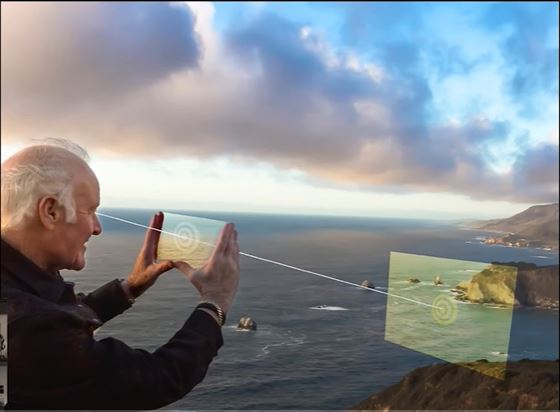
Ansel Adams taught his students to see shots by handing out a “framing card” which was file card with a rectangle cut out of its center. Students were told to go frame shots using the card—no camera! You would hold the card to your eye, and move in or out, to the sides, up and down to frame your shots. What a great exercise this was!

Here’s how you can improve your eye and ability to frame (yes, it takes practice just like tennis, cooking or surfing (my fav):

1. Watch this short video where I talk about framing and using the framing card.

2. Open up this framing card and print it on a 3×5 card (don’t worry abut the “Zone System” on it  for now.) Cut out the black rectangle so you have a hole about the shape of the images you’re shooting

3. Do the drill above: hold the card to your eye, and move in or out, to the sides, up and down to frame your shots, until you just start seeing the shots.

4. Now get out your camera and shoot. First with no regard for—in fact don’t frame the shot. Then same shot, frame it.
5. Compare the two until it clicks.
6. Send me your best shot, but only one, and I’ll give you honest feedback. I’ve set up a Flickr group for this. Also stay tuned on my FaceBook.
7. Keep doing 1-4 over and over for weeks.

BTW, Years later Uncle Sambo gave me his Roliflex, what an amazing camera. I loved the big square negatives and took it all over including my series My Mexico.

Good Shooting!

Next Page »

Powered by WordPress Blog admin